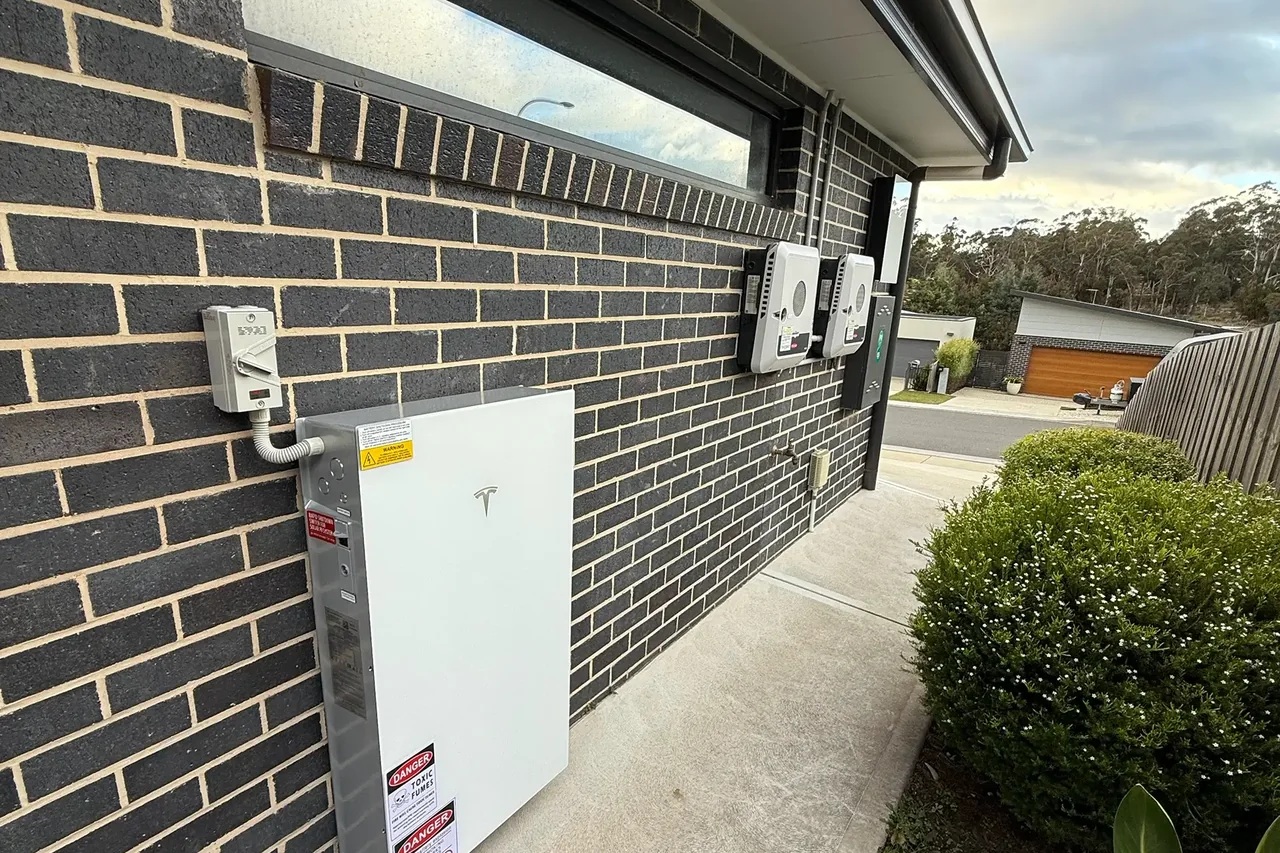
Short answer: usually yes. Most existing solar systems can have a battery added, and you do not automatically need to throw away the inverter you already have.
The real question is how the battery connects to what is already on your roof, because that decision drives the cost, the equipment and whether the system does what you want during a blackout.
The two ways a battery joins an existing system
There are two standard approaches. Neither is universally better. They suit different systems.
AC coupling: add a battery inverter alongside what you have. Your existing solar inverter keeps doing its job. A separate battery inverter is added to handle charging and discharging. Because the two systems talk to each other on the AC side, this works with a wide range of existing equipment, including systems whose inverter was never designed with storage in mind.
DC coupling: replace your solar inverter with a hybrid. A hybrid inverter handles both the panels and the battery in one unit. Solar charging the battery stays on the DC side rather than being converted to AC and back again, and you end up with one device rather than two. The trade is that you are replacing a working inverter to get there.
Which one suits you usually comes down to the age and condition of your current inverter. If it is relatively new and compatible, keeping it and AC coupling is often the sensible call. If it is well into its life, paying to keep it alive in the middle of a battery project can be a false economy, because you may be back replacing it in a couple of years and paying for a second visit.
What is a hybrid inverter?
A hybrid inverter is a single unit that manages both your solar panels and a battery. A standard solar inverter only converts panel output into the AC power your house uses. A hybrid adds the battery side: it decides when to send solar to the house, when to charge the battery and when to draw the battery back down.
That is why hybrid inverters come up in every retrofit conversation. Installing one means replacing your existing solar inverter, which is worth doing when the current unit is ageing or incompatible, and harder to justify when it is relatively new and working well. The alternative, AC coupling, leaves your solar inverter alone and adds a separate battery inverter instead.
Being "battery ready" is not the same as being a hybrid. Some inverters are marketed as battery ready but still need specific equipment, or a particular battery brand, to actually work with storage. The make and model is what settles it.
What has to be checked before anyone quotes you
A retrofit is an electrical job on an existing installation, not a product delivery. Anyone quoting properly will want to look at:
- Your inverter. Make, model, age and whether it can work with a battery directly. Some can, some cannot, and some can only do so with specific equipment.
- Your switchboard and metering. Whether they can support the new equipment, and what needs to change if they cannot.
- Your existing wiring and system layout. Including where a battery can physically and safely go.
- Your export data. How much surplus solar you currently send to the grid, because that is what a battery would capture.
- Your backup expectations. Which circuits you would want running during an outage, if any.
If a quote arrives without any of that being looked at, it is a price for a product rather than a design for your home.
Already have solar and thinking about a battery? Iconic Energy welcomes retrofit enquiries across Greater Hobart. Get in touch and we will arrange a site assessment to work out what your current system can support.
Will it keep the power on during a blackout?
Only if it is designed to. This is one of the most common misunderstandings about home batteries, and it matters more in a retrofit because the switchboard work is already on the table.
Not every battery keeps your power on in a blackout. Backup has to be designed in, and most systems back up selected circuits rather than the whole home. Depending on the battery, inverter and electrical configuration, backup can cover selected circuits and in some installations may extend further.
Say so early if outage protection matters to you. It changes which battery and inverter suit your home, which circuits are backed up, and how the switchboard needs to be wired. Raising it after the equipment is chosen is how people end up disappointed.
Does the federal battery discount apply to a retrofit?
The Cheaper Home Batteries Program reduces the upfront cost of an eligible home battery by around 30%, delivered through small-scale technology certificates. Eligibility turns on the battery, the property and the installer rather than on whether your solar is new, so a battery added to an existing system is not excluded for that reason.
The points that matter:
- Eligible batteries have a nominal capacity between 5kWh and 100kWh.
- Support is tiered by usable capacity. The first 14kWh attracts the full certificate factor, 14kWh to 28kWh attracts 60% of it, and 28kWh to 50kWh attracts 15%.
- The discount is based on your installation date, not the date you sign, and the factor steps down over time.
- Equipment must be on the approved product list and the installation must be carried out by an accredited installer.
Full detail is on our solar rebates and incentives in Tasmania page.
Is a retrofit worth it?
Sometimes the honest answer is no, and it is worth understanding the test before you get attached to the idea.
The case is strongest when you are exporting a lot of solar. Tasmania’s regulated minimum feed-in tariff is 9.276 cents per kilowatt hour for 2026-27, which is well below what you pay to buy power back in the evening. If a decent share of your generation is going to the grid at that rate while you buy it back at a much higher one after dark, storage captures value you are currently giving away.
The case is weakest when you export very little. A small array on a house with heavy daytime use may already be self-consuming most of what it generates, in which case a battery has little surplus to store and would spend much of the year part empty. In that situation more panels usually do more for your bill than more storage.
This is why the export figure matters more than any rule of thumb. If a retrofit does not stack up for your home, we would rather tell you that than sell you one.
Should you add panels at the same time?
Often worth considering. Many older systems were sized for a household that has since changed. If your array is small, adding capacity gives the battery something to charge from through the shoulder seasons rather than only in high summer.
Doing both at once also means one design, one set of approvals and one visit rather than two. Whether your inverter has the headroom for extra panels is part of the same compatibility question, which is another reason the inverter conversation comes first.
Our guides to what size solar system you need and what size solar battery you need cover the sizing side of both decisions.
Frequently asked questions
Do I need to replace my inverter to add a battery?
Not necessarily. An AC coupled battery adds its own inverter alongside your existing one, which is why it works with so many older systems. Replacing the inverter with a hybrid is a choice you make when the existing unit is near the end of its life or when a DC coupled design suits the system better.
Is it worth adding a battery to existing solar panels?
It depends on how much solar you currently export and how much power you use after dark. Those two numbers, not the battery brochure, decide it.
Can I add a battery myself?
No. This is licensed electrical work on a grid-connected installation. Beyond the safety and compliance issues, the federal discount requires installation by an accredited installer, so a DIY job forfeits it.
How much does it cost to add a battery?
Battery pricing is usually quoted by usable capacity. Current indicative pricing, before and after the federal discount, is in our guide to what a home battery costs in Tasmania. A retrofit also carries whatever electrical work your switchboard and system need, which is why the site assessment comes before the price.
Will adding a battery change my feed-in arrangement?
You will generally export less, because you are storing surplus instead of sending it out. That is the point of the exercise: at 9.276 cents per kilowatt hour, exported solar is worth considerably less to you than solar you use yourself.
How old is too old for a retrofit?
There is no fixed cut-off. It is a judgement about the condition and remaining life of your inverter, whether it is compatible with the battery you want, and whether the rest of the installation still meets current requirements. That judgement needs someone looking at the equipment, not at its age alone.
Finding out what your system can take
Iconic Energy is a Tasmanian owned electrical and solar business based in Kingston, and we welcome retrofit enquiries across Greater Hobart. As licensed electricians as well as solar and battery installers, we handle the electrical integration directly rather than subcontracting it.
The first step is working out what your current system can support. Our solar battery installation page explains how we approach that, and you can get in touch to arrange a site assessment.