14.725kW Solar + 33.28kWh Battery Installation in Claremont
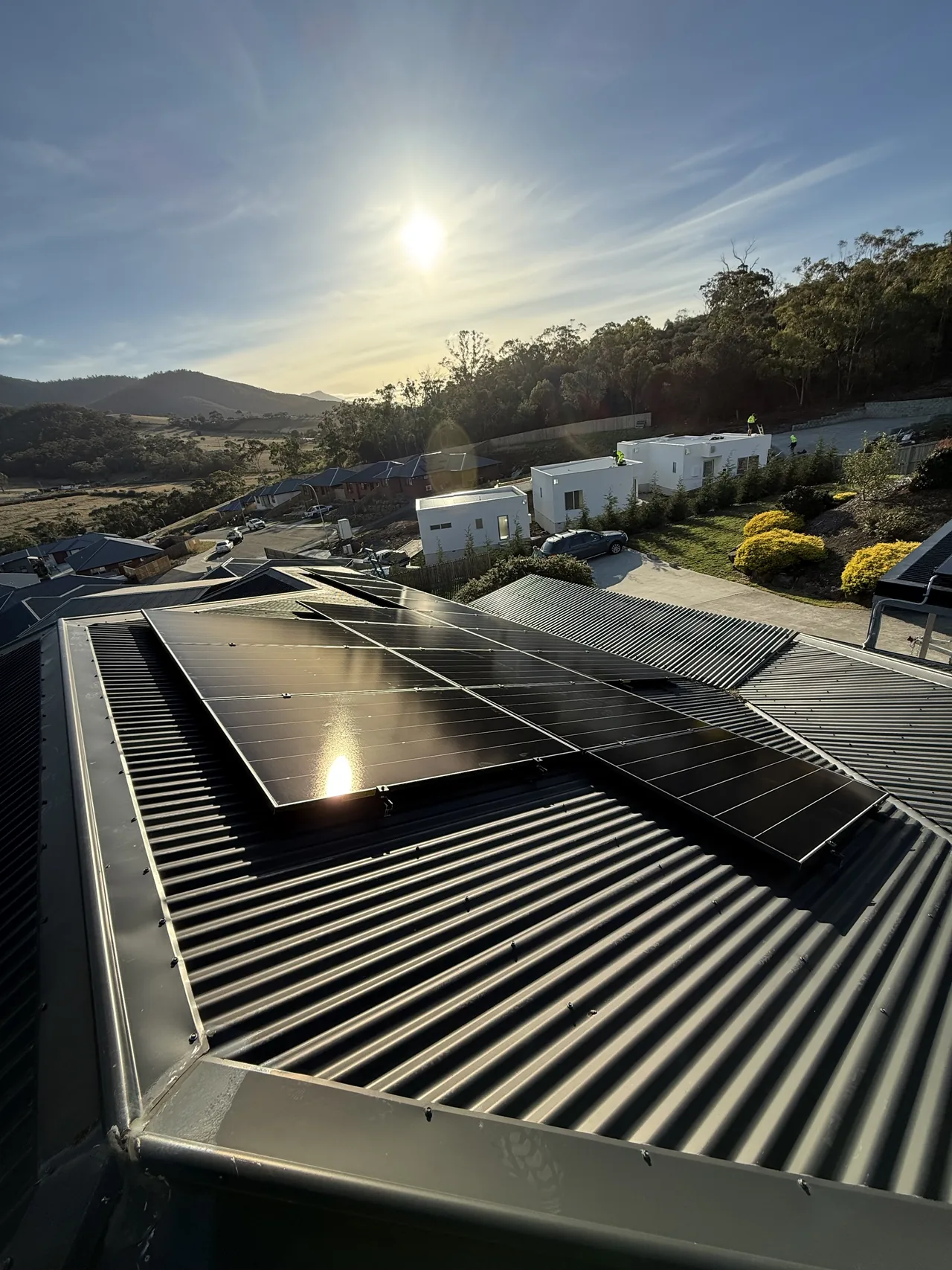
Iconic Energy designed and installed a substantial solar and storage system at a home in Claremont, combining a 14.725kW array of thirty-one Aiko panels with a GoodWe ESA inverter and four GoodWe ESA battery modules.
System at a glance
| Location | Claremont, Tasmania |
|---|---|
| Solar array | 14.725kW |
| Panels | 31 x Aiko 475W |
| Inverter | GoodWe ESA 9.999kW |
| Battery modules | 4 x GoodWe ESA 8.32kWh |
| Battery storage | 33.28kWh |
Fitting 31 panels across the roof
Thirty-one Aiko 475W panels make up the 14.725kW array. An array this size rarely fits on one plane, and here it is spread across several faces of the roof, including the lower roof above the carport.
Spreading an array changes the design rather than compromising it: each group has to be matched to the inverter's inputs. Our guide to what size solar system you need covers how roof area and usage interact.
Storage and the single-phase limit
Four GoodWe ESA 8.32kWh modules give 33.28kWh of storage, paired with a GoodWe ESA 9.999kW inverter. That inverter rating is not arbitrary: it sits just under the 10kVA ceiling that applies to single-phase connections under TasNetworks' basic connection terms, which is why it appears on a lot of larger single-phase systems in Tasmania.
Panels can exceed the inverter rating, which is how a 14.725kW array sits behind a 9.999kW inverter. Solar batteries in Hobart covers the storage side.
Switchboard and shutdown procedure
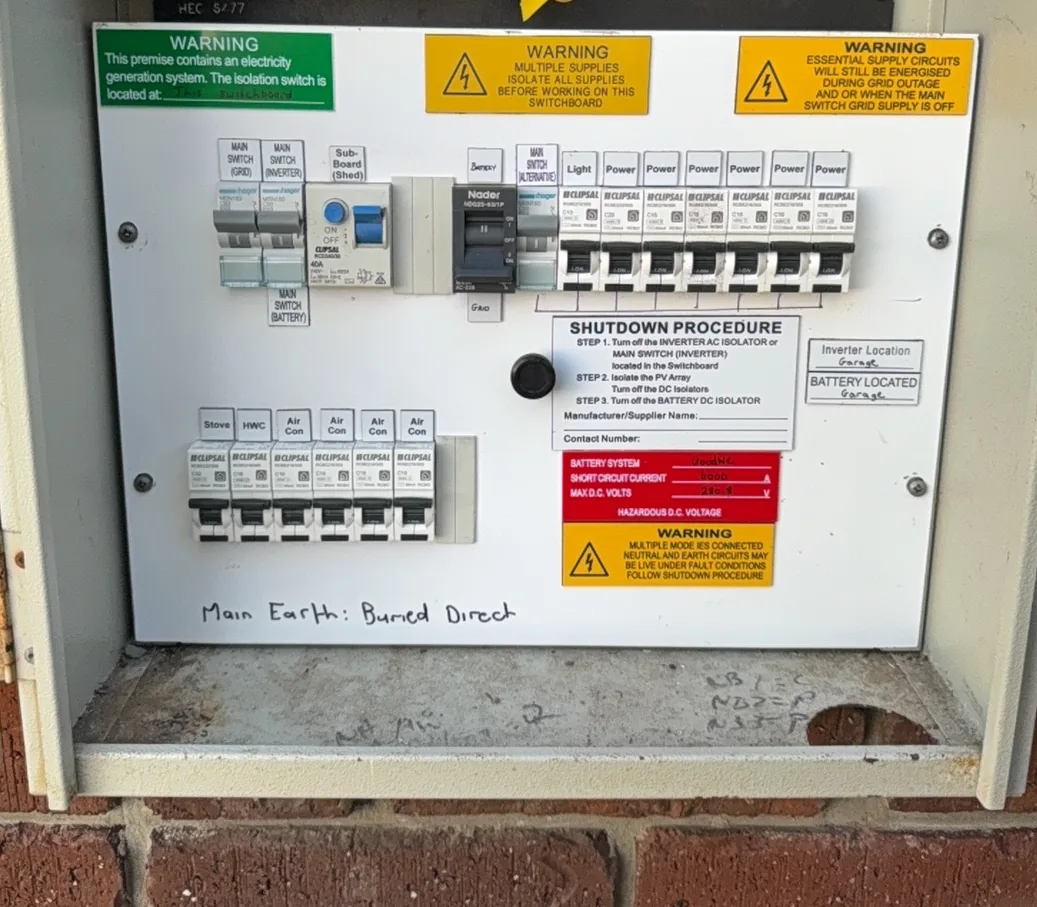
With solar and a battery on site, the switchboard has to carry warning signage for multiple supplies and a written shutdown procedure. Both are in place here, along with labelled circuits, so the system can be isolated in the right order.
The finished installation
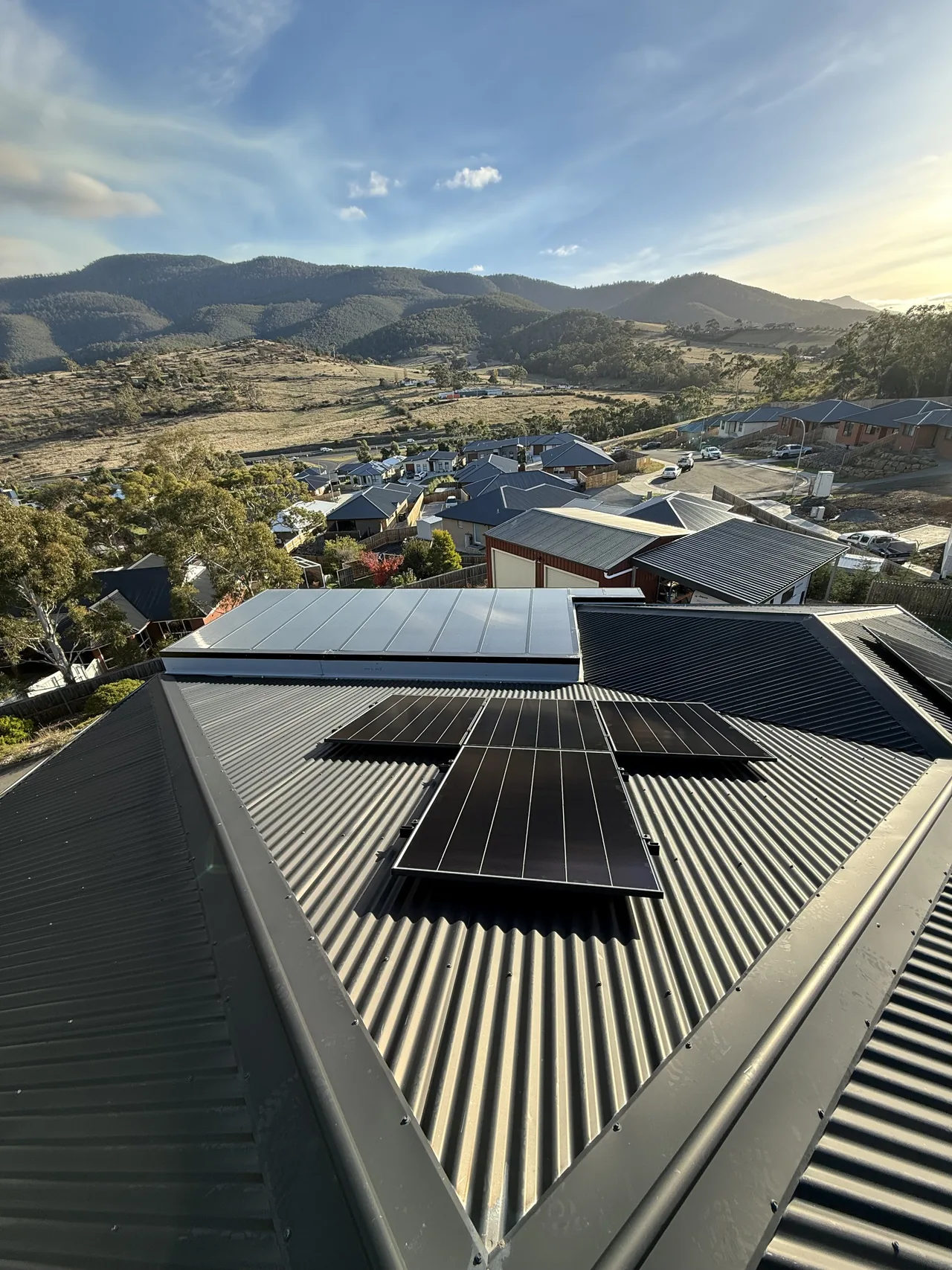
Thirty-one Aiko panels across the roof. 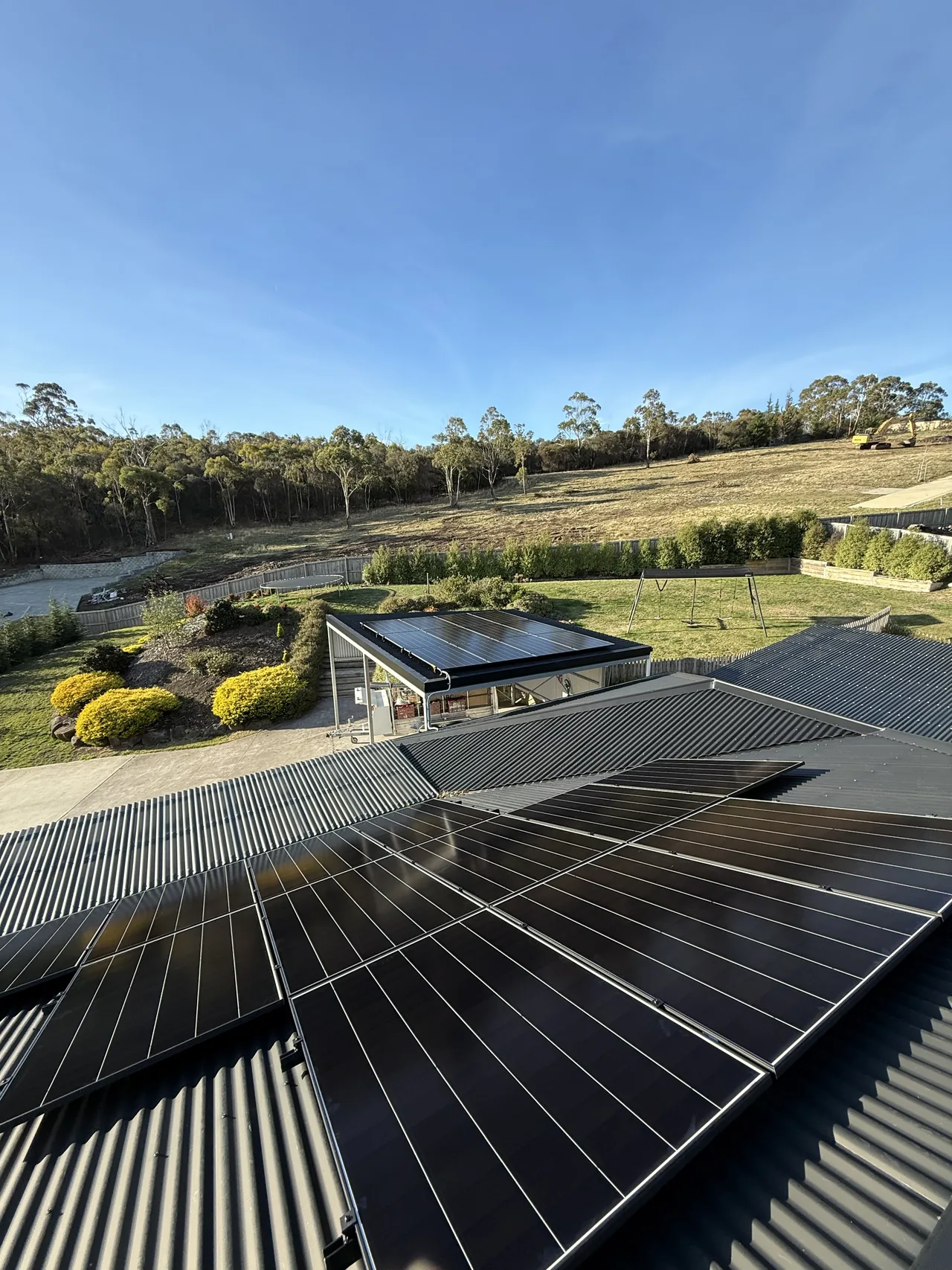
The array from the ridge. 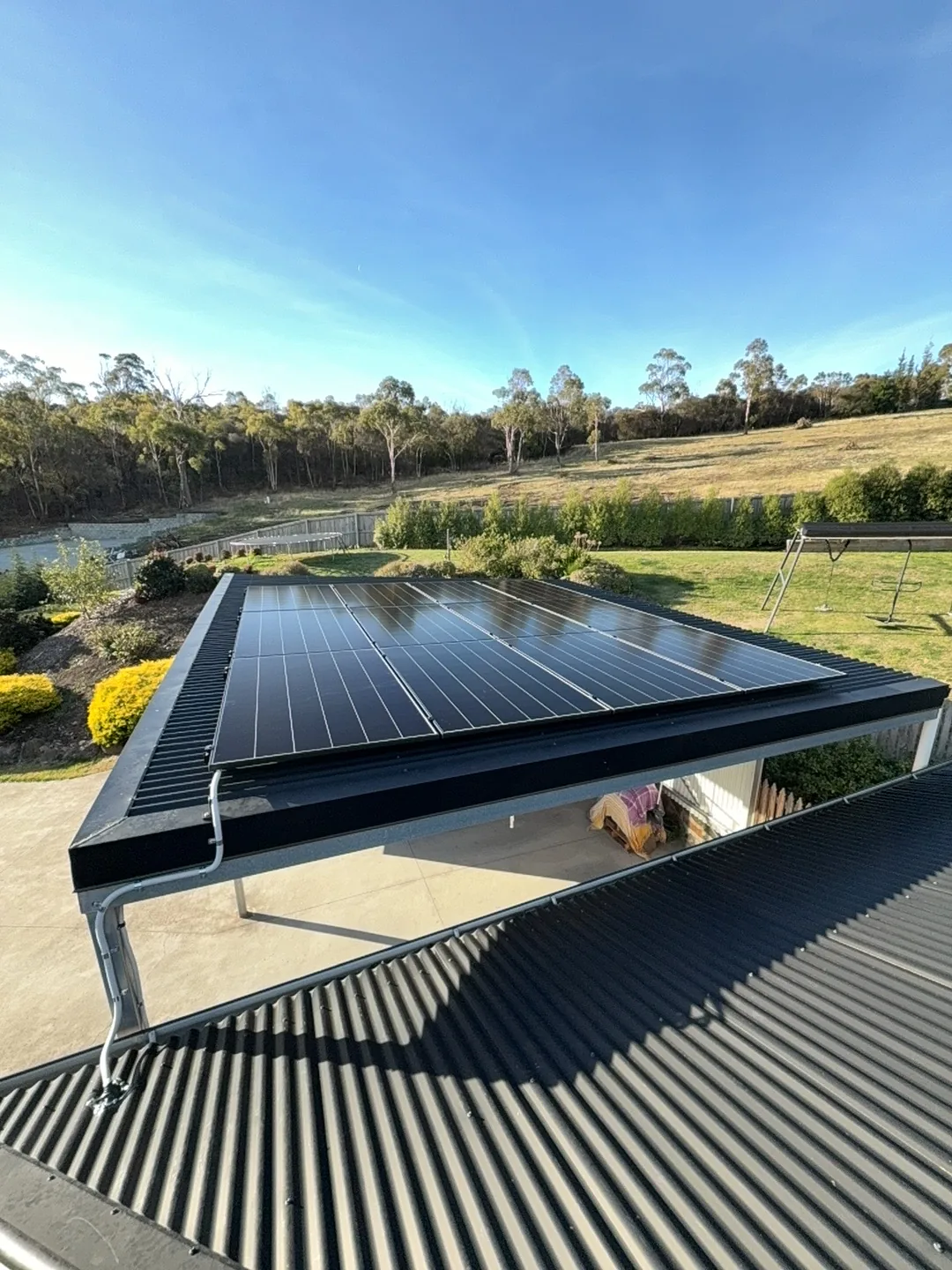
Panels continuing onto the lower roof.
Planning a larger solar and battery system?
Larger systems run into connection rules as well as roof space, and both are worth understanding before you commit. Start with the solar savings calculator or read about solar panel installation, then book a site assessment.