17.1kW Solar + 48.36kWh Battery Installation in Huonville
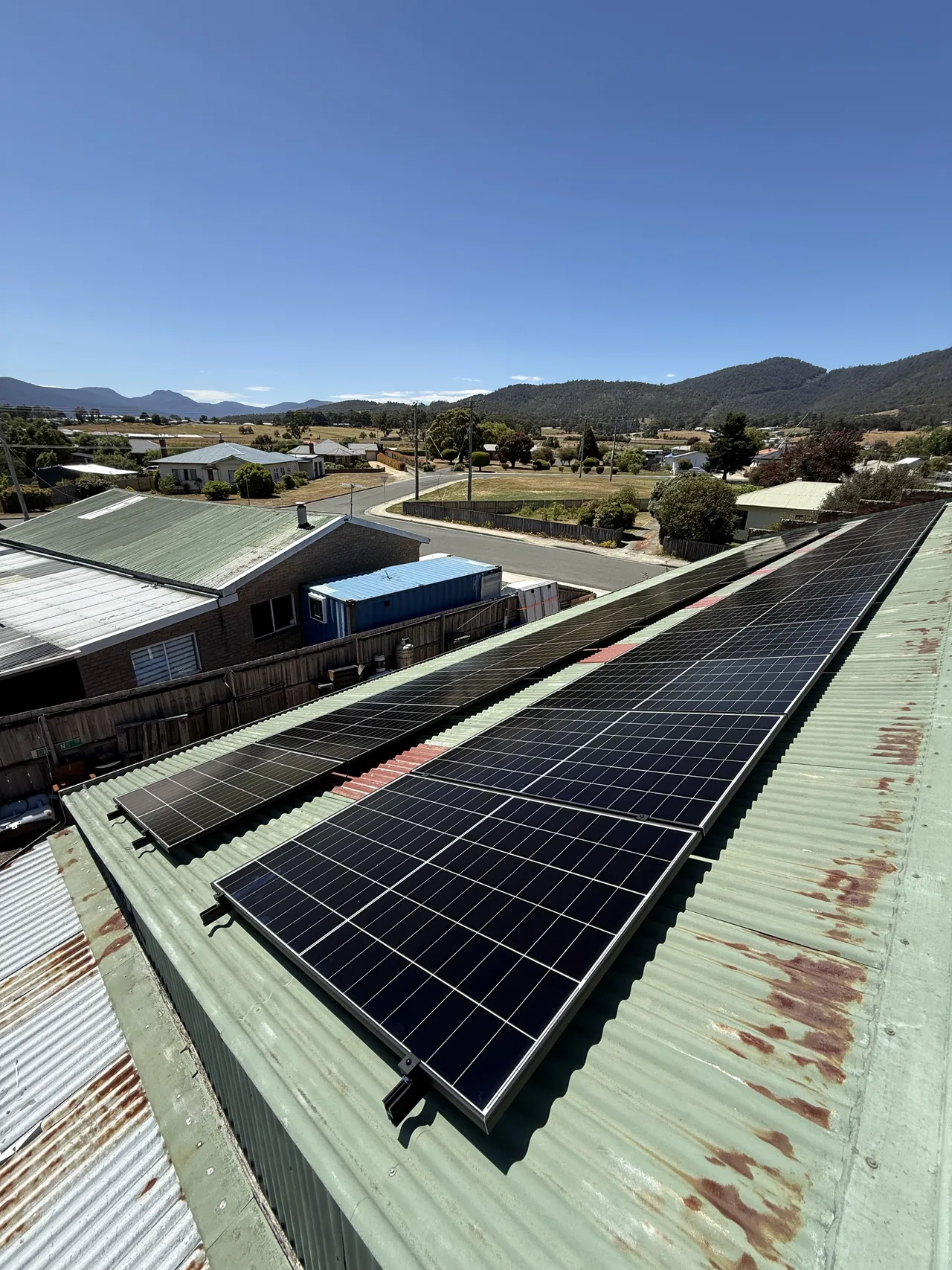
Iconic Energy installed a three-phase solar and storage system at a property in Huonville, pairing a 17.1kW array of thirty-six Aiko panels with a Sigenergy 15kW three-phase energy controller and 48.36kWh of battery storage.
System at a glance
| Location | Huonville, Tasmania |
|---|---|
| Solar array | 17.1kW |
| Panels | 36 x Aiko 475W |
| Energy controller | Sigenergy 15kW three-phase |
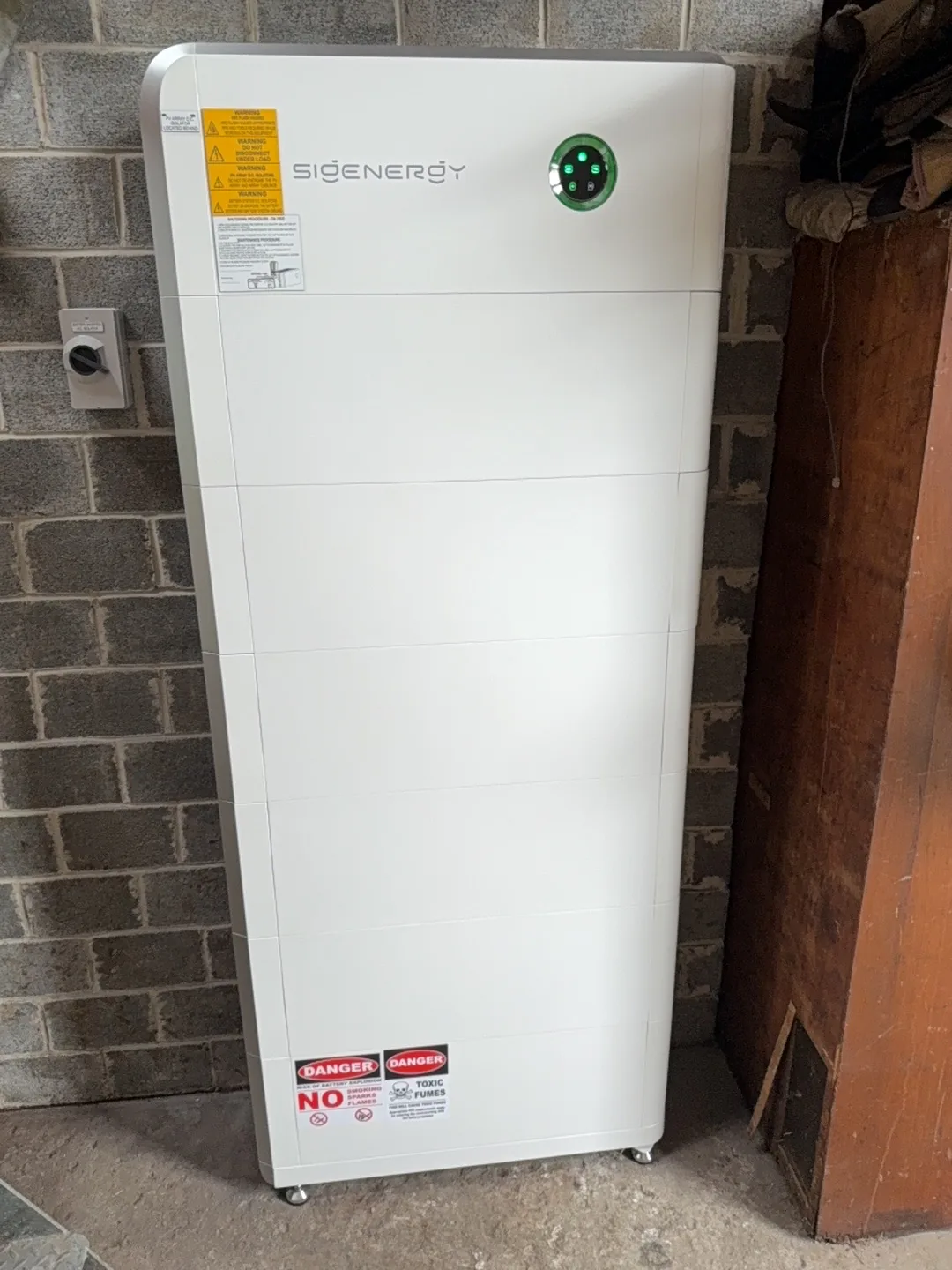
| Battery modules | 6 x Sigenergy 8.06kWh |
| Battery storage | 48.36kWh |
| Other equipment | Sigenergy three-phase energy gateway |
A three-phase system
This property is on a three-phase supply, which changes the equipment list. Instead of a single-phase inverter, the system uses a Sigenergy 15kW three-phase energy controller with a matching three-phase energy gateway.
Three-phase also lifts the ceiling on what can be installed and exported, which is part of why an array of this size was practical here. Our guide to what size solar system you need covers how connection type shapes the design.
36 panels and 48.36kWh of storage
Thirty-six Aiko 475W panels give a 17.1kW array, installed as two long runs down the length of the roof. Storage is 48.36kWh across six Sigenergy 8.06kWh battery modules.
That is a large amount of storage by residential standards. The right figure for any given property comes out of its own evening and overnight usage, which is the subject of what size solar battery you need, and solar batteries in Hobart covers the systems we install.
Gateway and labelling
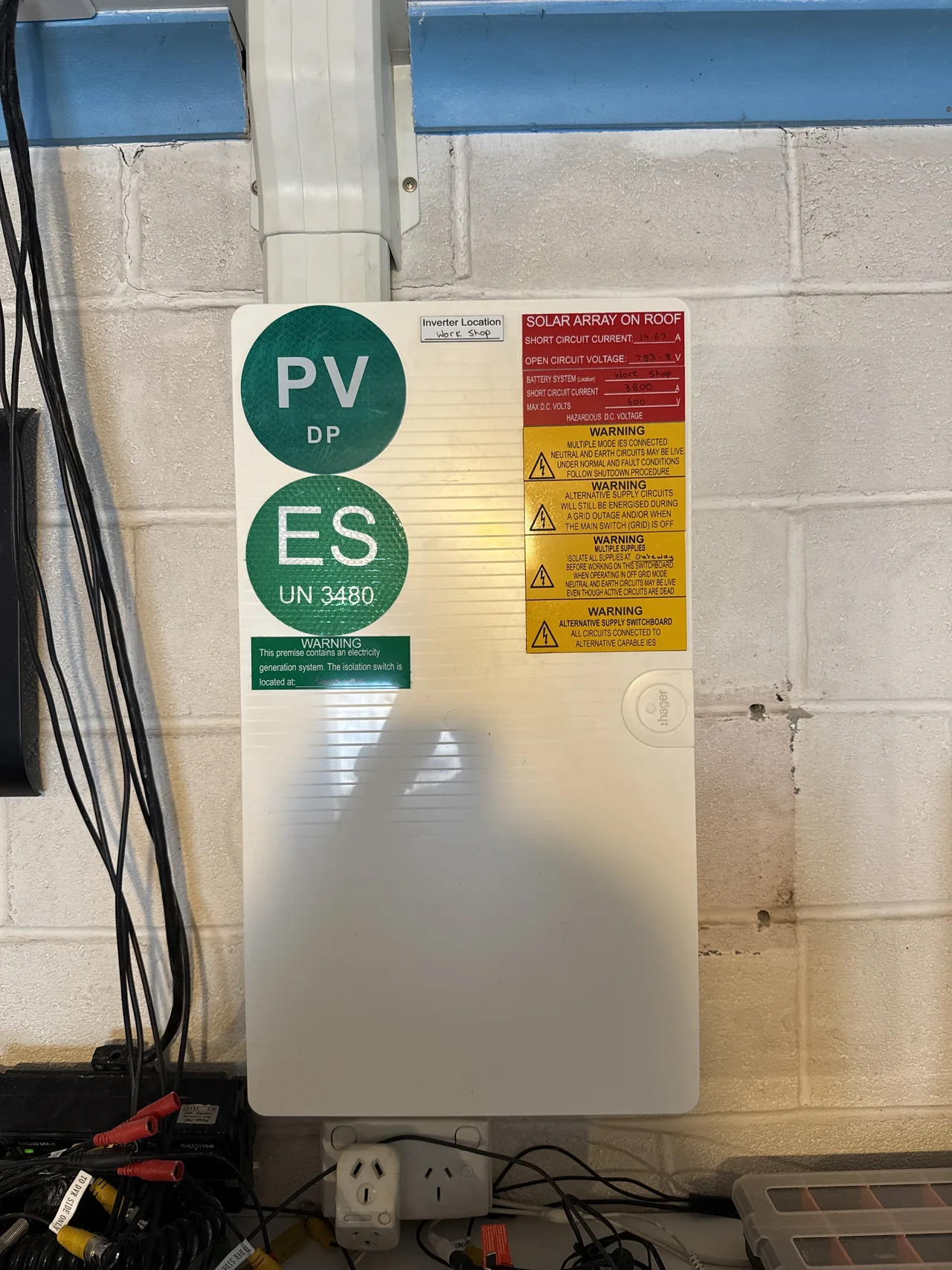
The energy gateway carries its own danger labelling and bypass switching, and the inverter area is marked with PV and energy storage signage. On a three-phase installation with battery storage, that labelling is how anyone working on the property later knows what they are dealing with.
The finished installation
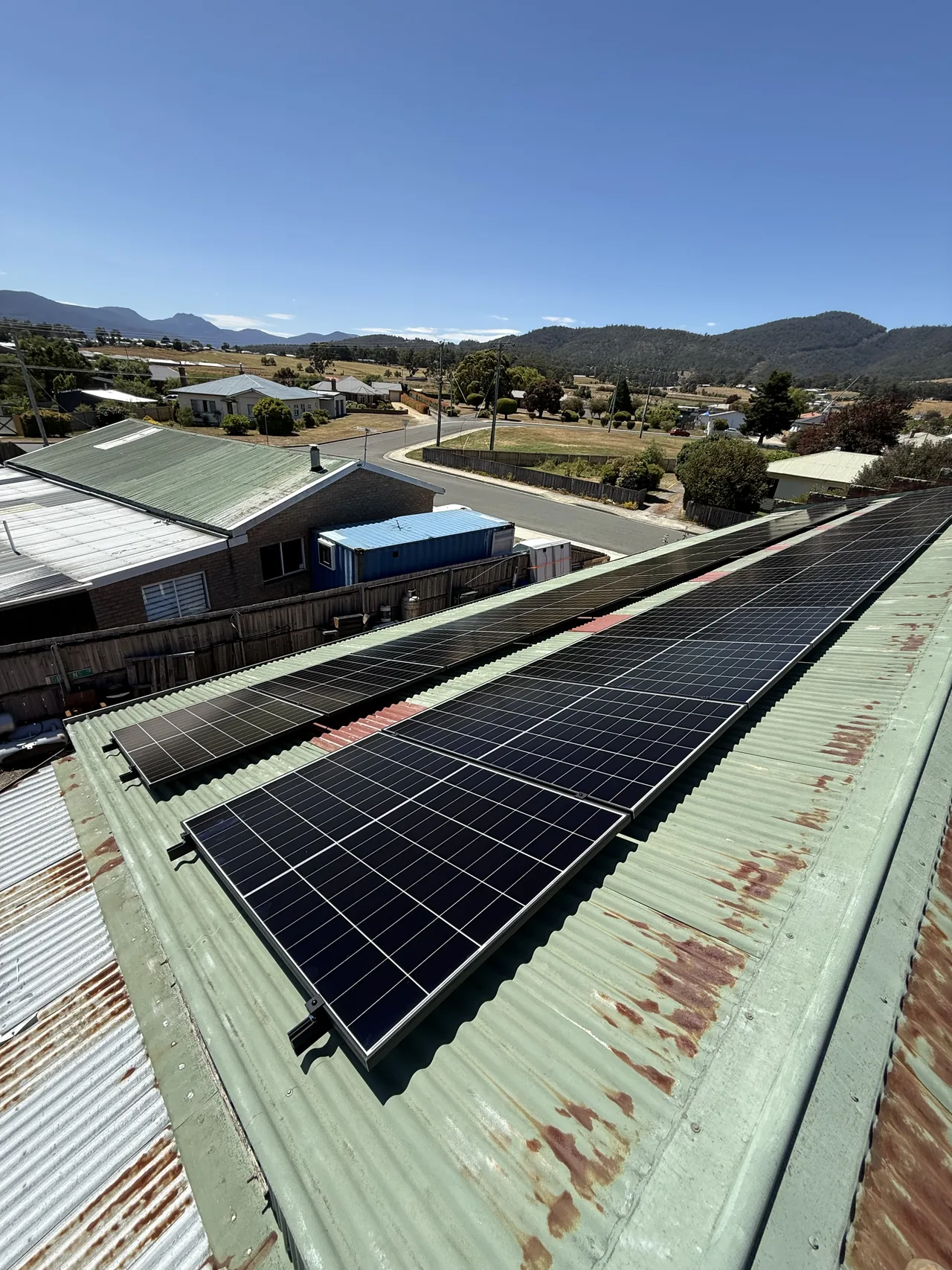
Thirty-six Aiko panels in two long runs. 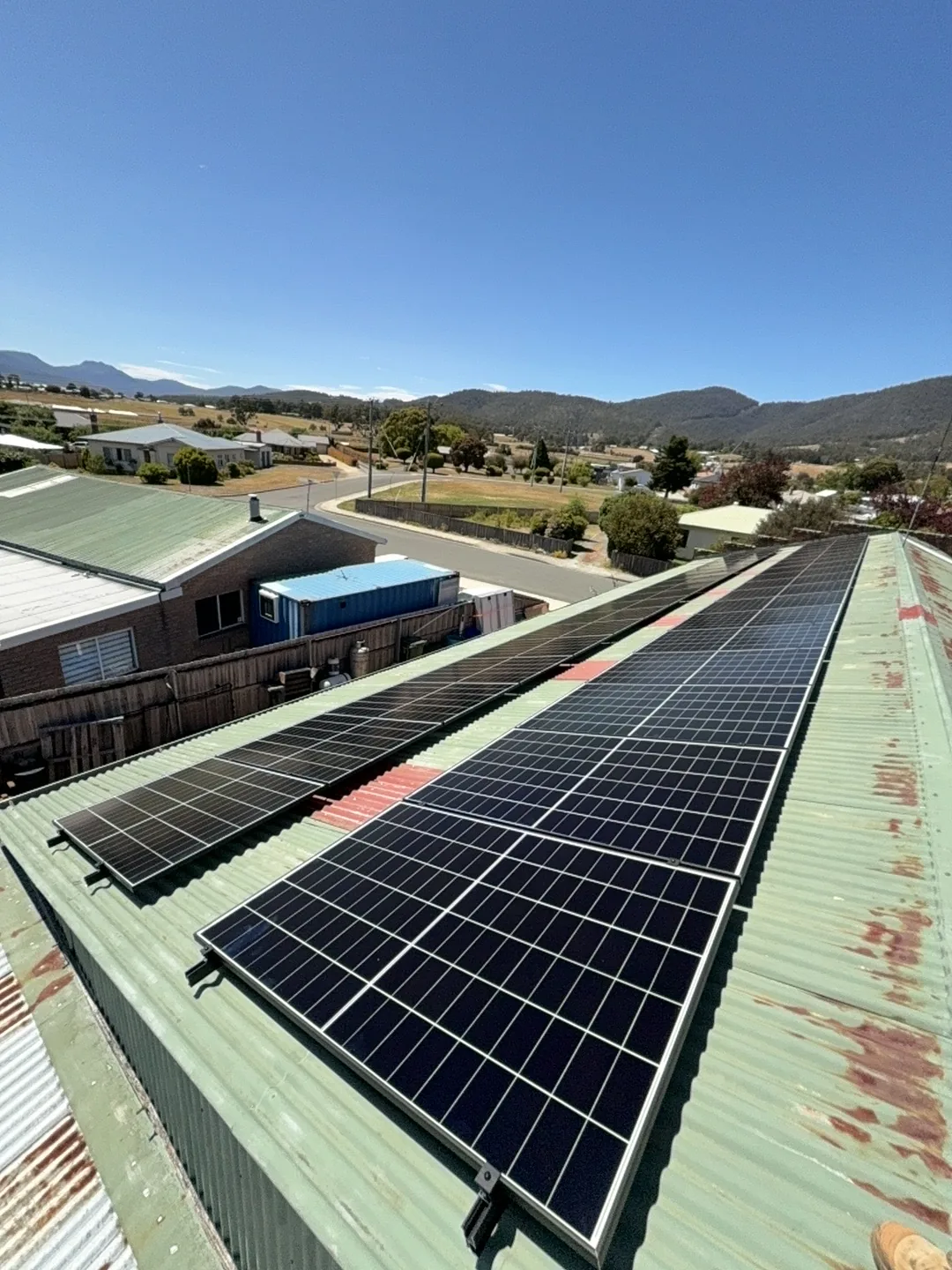
The finished array. 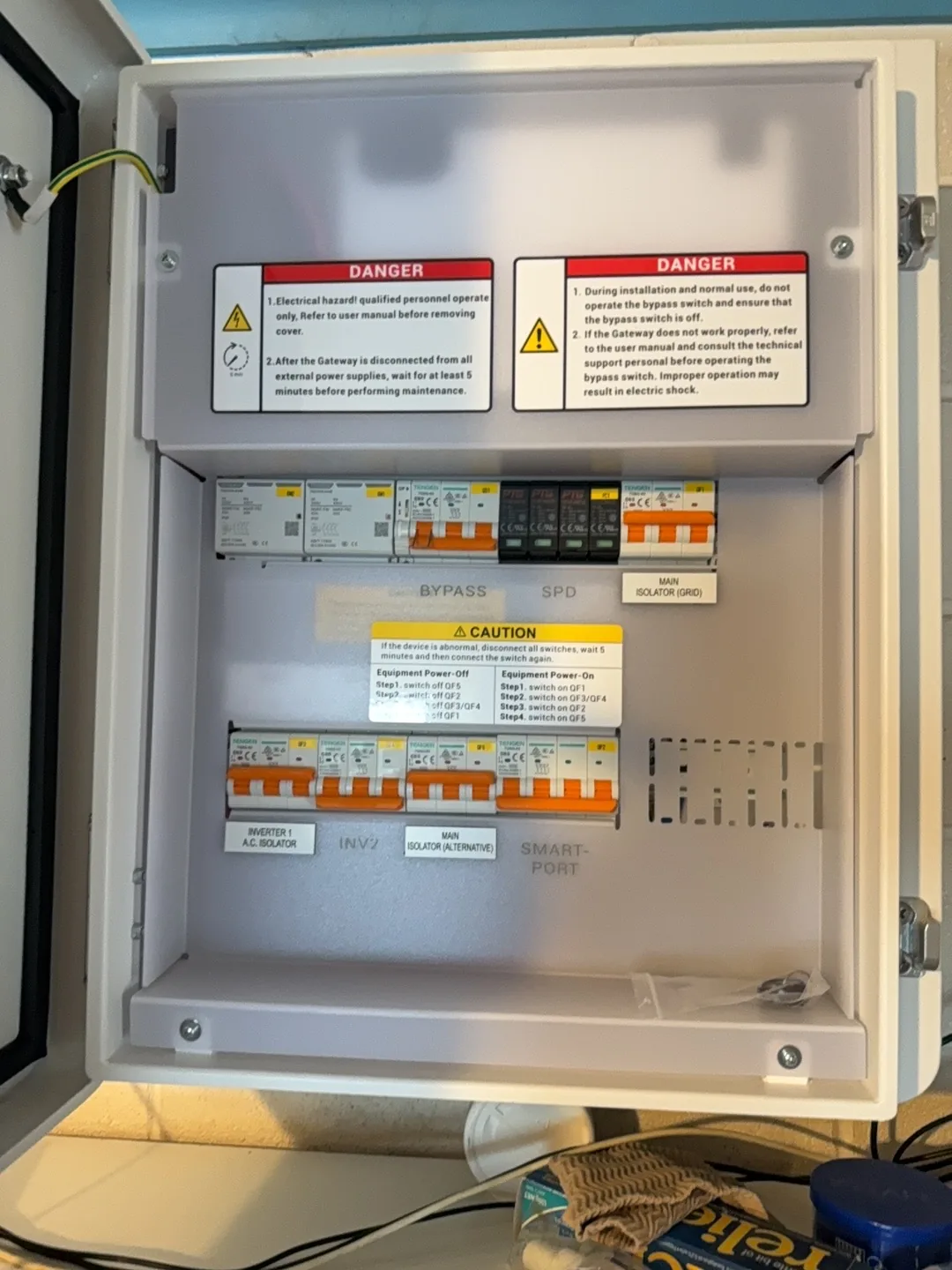
Inside the three-phase energy gateway.
Three-phase property, or a larger storage requirement?
Three-phase sites have more room to work with, and the design should use it. Try the solar savings calculator, read about solar panel installation, then book a site assessment.